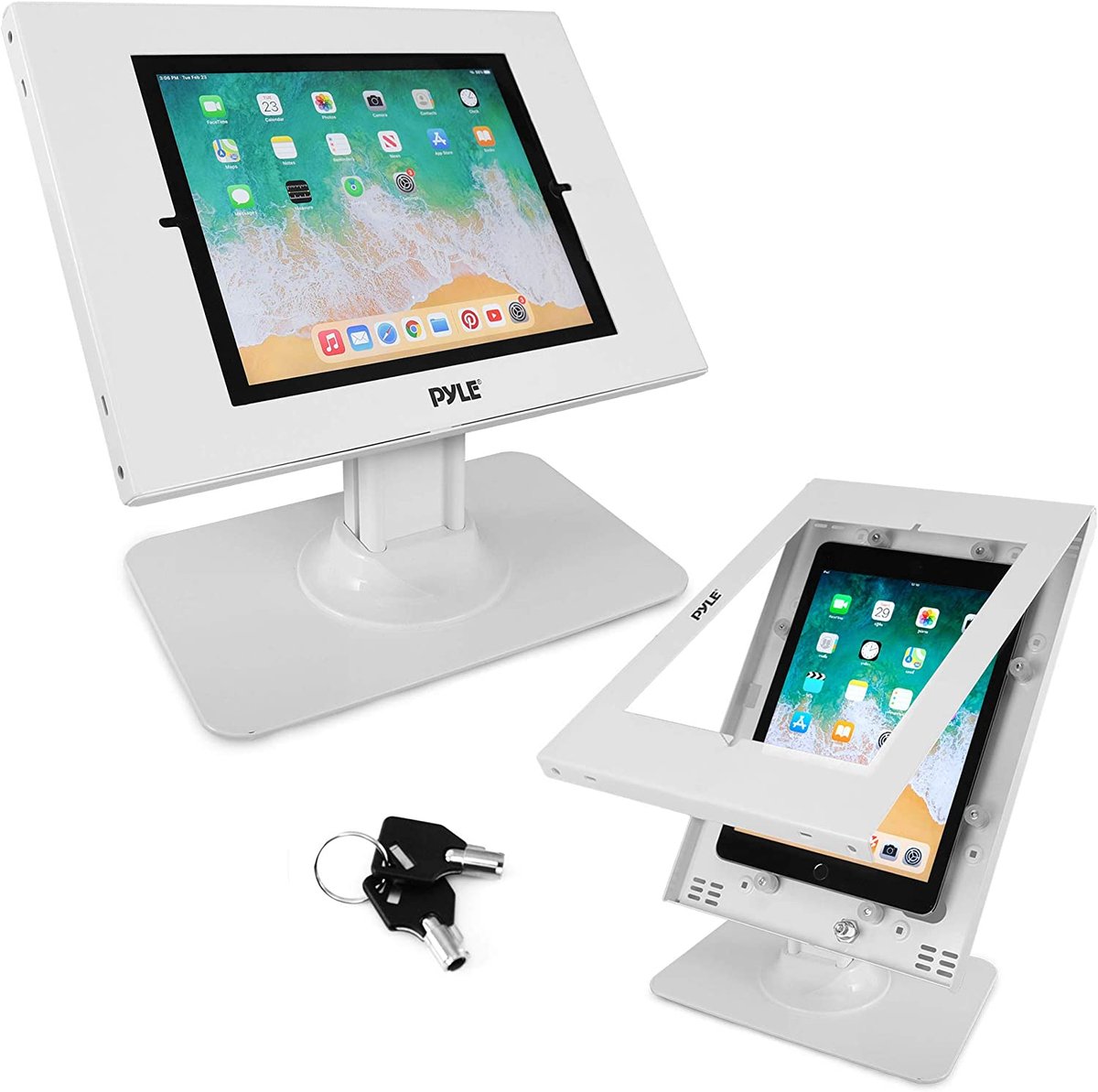
A newly unboxed iPad is a marvel of design and technology, but its true potential often lies hidden until you pair it with the right accessories. Yet, the excitement of enhancing your device can quickly turn to frustration if you end up with a sleek new case that doesn't quite fit or a stylus that refuses to connect. Choosing Compatible Accessories for Your iPad Generation isn't just about buying cool gadgets; it's about ensuring proper fit, seamless functionality, and unlocking a truly personalized iPad experience.
It’s a common pitfall: assuming all iPads are alike. The truth is, Apple’s tablet lineup has evolved significantly over the years, leading to variations in screen size, charging ports, internal components, and even magnetic attachment points. These seemingly minor differences dictate exactly which accessories will work flawlessly with your specific model and which will be, quite frankly, useless.
At a Glance: Your Quick Guide to iPad Accessory Compatibility
- Identify Your iPad First: Always check your iPad's "A" model number on the back or in Settings before buying anything.
- Know Your Port: Newer iPads (Air 4th-gen and later, Pro 3rd-gen and later, Mini 6th-gen) use USB-C; older models and the 9th-gen iPad still use Lightning.
- Pencil Matters: Apple Pencil compatibility is specific – some iPads use the 1st-gen, others the 2nd-gen, and the latest models support the USB-C Pencil or Pencil Pro.
- Screen Size is Key: Cases, keyboard folios, and screen protectors are almost always screen-size and model-specific.
- Consider Your Workflow: Think about how you use your iPad (work, art, entertainment, travel) to prioritize essential accessories.
The First Step: Identifying Your iPad's Generation and Model
Before you even think about accessories, you need to know exactly which iPad you own. This isn't just a suggestion; it's a non-negotiable first step that will save you time, money, and a lot of headaches. Apple has released numerous iPad models, often with similar appearances but crucial internal and external differences.
The most reliable way to identify your iPad is by its model number, which starts with an "A" followed by four digits (e.g., A2378). You can find this number in two places:
- On the back of your iPad: Look for the small, etched text near the bottom.
- In Settings: Go to Settings > General > About. Tap the "Model Number" field, and it will switch to show the "A" number.
Once you have this "A" number, a quick search online (or using a dedicated Apple support page) will tell you precisely which iPad model and generation you have. This information is your golden ticket to compatibility. For a detailed walkthrough on how to find this crucial information, make sure to check out how to check iPad generation. Without this foundational knowledge, you're essentially shopping blind.
Essential Compatibility Factors Beyond Model Number
Once you know your iPad model, a few key technical specifications will dictate accessory choices:
- Charging Port Type: This is perhaps the most significant compatibility factor for many accessories.
- USB-C: Most newer iPads, including all iPad Pro models (3rd generation and later), iPad Air (4th generation and later), and iPad mini (6th generation), feature a USB-C port. This versatile port allows for faster charging, data transfer, and direct connection to a vast ecosystem of USB-C accessories like external displays, SSDs, and hubs.
- Lightning: The standard iPad (up to the 9th generation) and older iPad Air/mini models use Apple's proprietary Lightning port. This limits direct connectivity to Lightning-specific accessories and requires adapters for broader compatibility.
- Screen Size: This is obvious for cases and screen protectors but also affects keyboard folio dimensions and how comfortable an iPad feels on certain stands. Common sizes include 8.3-inch (mini), 10.2-inch (standard iPad), 10.9-inch (Air), 11-inch (Pro), and 12.9-inch (Pro).
- Apple Pencil Compatibility: Not all iPads support the same Apple Pencil.
- Apple Pencil (1st Generation): Charges via Lightning port (plugs directly into the iPad) or an adapter. Compatible with older iPad Pro models, iPad (6th-9th gen), iPad Air (3rd gen), and iPad mini (5th gen).
- Apple Pencil (2nd Generation): Charges magnetically on the side of compatible iPads. Compatible with iPad Pro (3rd gen and later), iPad Air (4th gen and later), and iPad mini (6th gen).
- Apple Pencil (USB-C): Charges via USB-C cable. Compatible with iPad (10th gen), iPad Air (4th gen and later), iPad Pro (11-inch 1st gen and later, 12.9-inch 3rd gen and later), and iPad mini (6th gen). Note it lacks pressure sensitivity and double-tap gestures of the 2nd Gen/Pro.
- Apple Pencil Pro: The latest model with advanced features like barrel roll, squeeze, and haptic feedback. Compatible with the M2 iPad Air and M4 iPad Pro.
- Smart Connector: A set of three magnetic contact points found on the side or back of certain iPads. This provides power and data to accessories like Apple's Smart Keyboard Folio and Magic Keyboard, creating a more reliable, latency-free connection than Bluetooth.
Diving Deep into Accessory Categories
Now that you're armed with your iPad's crucial identification details, let's explore the world of accessories, focusing on what to look for and what to avoid.
Cases and Keyboard Folios: Protection Meets Productivity
A case is often the first accessory people buy, and for good reason: it protects your investment. But a good case can do much more, transforming your iPad's functionality.
Compatibility Checklist:
- Exact Model Fit: Crucial for camera cutouts, button access, and port alignment. A case for an 11-inch iPad Pro will not fit a 10.9-inch iPad Air perfectly due to camera module differences, even if screen sizes are similar.
- Magnetic Attachment: Some cases, especially keyboard folios, rely on magnets for secure attachment and auto-wake/sleep features.
- Apple Pencil Support: If you use an Apple Pencil (2nd Gen or Pro), ensure the case has an open side or a dedicated slot for magnetic charging and storage.
Featured Accessory Highlight: Apple Magic Keyboard
The Apple Magic Keyboard is a premium option that dramatically elevates your iPad's productivity. It offers a comfortable, backlit keyboard, an integrated trackpad for precise cursor control, and a sleek floating design. It connects via the Smart Connector, meaning no charging or pairing is needed. - Pros: Exceptional typing experience, precise trackpad, sturdy protection, pass-through USB-C charging.
- Cons: Expensive, adds significant weight and bulk, limited range of screen angle adjustment.
- Compatibility: Specific to iPad Pro (11-inch and 12.9-inch) and iPad Air (4th-gen, 5th-gen, and M2). Ensure you select the version made for your exact screen size and generation.
Beyond the Magic Keyboard: - Basic Folio Cases: Offer screen protection and often double as a stand. Look for durable materials and good corner protection.
- Rugged Cases: Designed for maximum protection against drops and spills, often at the expense of slimness. Ideal for kids or field work.
- Keyboard Folio Alternatives: Brands like Logitech offer excellent keyboard cases with trackpads that are often more affordable and provide a wider range of viewing angles than the Magic Keyboard.
Stands and Docks: Ergonomics and Connectivity
Holding an iPad for extended periods can be tiring. A good stand or dock provides ergonomic comfort and can expand your connectivity options.
Compatibility Checklist:
- Tablet Size and Weight Capacity: Ensure the stand can securely hold your iPad model without tipping.
- Charging Port Access: If you plan to charge while on the stand, ensure the design doesn't obstruct the port.
- Adjustability: Look for stands that offer a good range of height and angle adjustments for various uses (typing, drawing, video calls, media consumption).
Featured Accessory Highlight: Twelve South HoverBar Duo
This versatile stand securely holds iPads of various sizes (e.g., 11-inch iPad Pro) with a strong, adjustable arm. It comes with both a weighted desktop base and a desk clamp, fitting desk thicknesses from 0.4 to 1.4 inches. - Pros: Extremely versatile (desk stand or clamp), highly adjustable, secure grip, premium build quality.
- Cons: Can be pricey, takes up some desk space.
- Compatibility: Its adjustable clamp mechanism makes it compatible with a wide range of iPad sizes, typically from mini to 12.9-inch Pro.
Featured Accessory Highlight: Satechi Hub Stands
Satechi offers innovative, lightweight (around 10 ounces), and foldable hub stands that serve a dual purpose: propping up your iPad for video viewing or work, while also providing essential connectors. - Pros: Portability, versatility (stand + hub), essential connectors (HDMI, USB-A, SD card slots).
- Cons: Requires a USB-C iPad.
- Compatibility: Designed specifically for iPads with a USB-C port, making them ideal for iPad Pro, Air (4th-gen+), and mini (6th-gen).
Why a Stand? An iPad stand eliminates the need to constantly hold the tablet, enhancing comfort for gaming, media consumption, video calls, or using it as a secondary display.
Keyboards: Typing Efficiency Unlocked
For serious typing, a physical keyboard is indispensable. It frees up screen real estate and provides a more tactile and efficient typing experience than the on-screen keyboard.
Compatibility Checklist:
- Connection Type:
- Smart Connector: For Apple's Smart Keyboard Folio and Magic Keyboard. Offers instant pairing and no battery charging required. Model-specific.
- Bluetooth: Most third-party keyboards connect via Bluetooth, offering universal compatibility across iPad models (and other devices). Requires occasional charging.
- iPadOS Support: Ensure the keyboard fully supports iPadOS features like media controls and function keys.
Featured Accessory Highlight: Logitech MX Keys Mini
The Logitech MX Keys Mini is a compact, comfortable keyboard that connects to up to three devices simultaneously, allowing for quick switching between your iPad, Mac, or PC. It includes handy keys for emojis and mic mute. - Pros: Multi-device connectivity, compact design, comfortable backlit keys, excellent battery life.
- Cons: Bluetooth only (no Smart Connector).
- Compatibility: Connects via Bluetooth, making it universally compatible with any iPad running a modern version of iPadOS.
Choosing a Keyboard: If you're looking for the most integrated, "laptop-like" experience, a Smart Connector keyboard case like the Magic Keyboard is hard to beat. If flexibility, multi-device use, or a more traditional desktop setup is your goal, a standalone Bluetooth keyboard like the MX Keys Mini is an excellent choice. Using a physical keyboard hides the software keyboard, maximizing display use.
Mice and Trackpads: Precision Navigation
With iPadOS 13.4, Apple introduced robust mouse and trackpad support, allowing a desktop-like cursor experience. This significantly enhances precision for tasks like editing documents, navigating complex interfaces, or graphic design.
Compatibility Checklist:
- Bluetooth Connectivity: Virtually all compatible mice and trackpads connect via Bluetooth.
- iPadOS Version: Ensure your iPad is running iPadOS 13.4 or later to fully utilize mouse support. Newer iPadOS versions, like iPadOS 26 (likely a typo, perhaps referring to iPadOS 16/17/18), have further refined the desktop-like cursor, enhancing precision.
Featured Accessory Highlight: Logitech MX Anywhere 3S Mouse
This lightweight (95 grams) mouse features silent buttons, an 8K DPI optical sensor usable on virtually any surface, and a 70-day rechargeable battery. It’s also made from 61-78% post-consumer recycled plastic. - Pros: Compact, silent clicks, works on any surface, long battery life, sustainable materials.
- Cons: May be too small for some hands for extended use.
- Compatibility: Connects via Bluetooth, making it universally compatible with any iPad running iPadOS 13.4 or later.
Why a Mouse? For tasks requiring fine motor control – editing spreadsheets, navigating a timeline in a video editor, or even precise text selection – a mouse or trackpad offers accuracy that touch alone can't match. Pairing your iPad with a keyboard and mouse can truly transform it into a portable workstation.
Styluses: Pen to Tablet Power
For artists, note-takers, and anyone who prefers a more tactile interaction, a stylus is a game-changer. The Apple Pencil sets the gold standard, but excellent alternatives exist.
Compatibility Checklist:
- Apple Pencil Generation: As detailed earlier, this is the most critical factor. The 1st-gen, 2nd-gen, USB-C, and Pro Pencils are not interchangeable across all iPad models.
- Charging Method: Lightning, USB-C, or magnetic.
- Pressure Sensitivity/Tilt Support: Key features for artists.
Featured Accessory Highlight: Logitech Crayon
The Logitech Crayon is a fantastic budget-friendly option for note-takers and journal-keepers. It offers excellent palm rejection and tilt support, making it feel very natural for writing and sketching, and it charges via Lightning or USB-C depending on the model. - Pros: More affordable than Apple Pencil, excellent palm rejection, robust design, charges via common ports.
- Cons: Lacks pressure sensitivity (a deal-breaker for serious digital artists), no double-tap gesture.
- Compatibility: Logitech Crayon has versions compatible with specific iPad models. You must choose the Crayon model designed for your iPad's charging port and Apple Pencil generation (e.g., a USB-C Crayon for USB-C iPads).
Beyond the Apple Pencil and Crayon: Styluses simplify tasks like handwritten notes, annotations, and quick sketches. Newer iPadOS versions and features like Apple Intelligence continue to improve text recognition and scribble transformation into typed text, making styluses more powerful than ever.
Screen Protectors: Guarding Your View, Enhancing Your Touch
A screen protector isn't just about avoiding scratches; it can also enhance your digital drawing and writing experience.
Compatibility Checklist:
- Exact Screen Size and Model: Crucial for precise fit, camera cutout alignment, and sensor functionality.
- Touch Sensitivity: Ensure the protector doesn't negatively impact touch response.
Types of Screen Protectors: - Glossy/Clear: Offers maximum transparency and retains the iPad's vibrant display quality. Best for media consumption.
- Matte/Anti-Glare: Reduces reflections and fingerprints. Many artists prefer a matte protector as it mimics a pen-on-paper feel and can reduce stylus nib wear.
- Consideration: Matte protectors may introduce a slight "sparkle" or blur to the screen, which some users find distracting.
- Magnetic Covers: These aren't traditional sticky screen protectors but removable magnetic sheets that offer a textured surface for drawing/writing. They can be easily removed for clear viewing, offering the best of both worlds.
- Consideration: Ensure it's compatible with your iPad's magnetic edges.
USB-C Hubs: Expanding Your Connectivity
If your iPad has a USB-C port (iPad Pro, Air 4th-gen+, Mini 6th-gen+), a USB-C hub is arguably the single most transformative accessory you can buy. All compatible iPad models have only a single USB-C port, making hubs essential for simultaneous charging and wired accessory use.
Compatibility Checklist:
- USB-C iPad: Only works with iPads featuring a USB-C port.
- Port Selection: Choose a hub with the ports you actually need (HDMI for external display, USB-A for flash drives/peripherals, SD/microSD card slots for photographers, Ethernet for wired internet).
- Power Delivery (PD): Ensure the hub supports PD passthrough so you can charge your iPad while using other ports.
Why a USB-C Hub? - External Displays: Connect your iPad to a monitor or TV for presentations or a larger workspace.
- External Storage: Plug in flash drives, SSDs, or external hard drives to manage files.
- Wired Peripherals: Connect USB microphones, audio interfaces, or older USB-A accessories.
- Networking: An Ethernet port can provide a more stable internet connection than Wi-Fi.
iPadOS supports various reputable USB hubs and dongles to expand port options, giving your iPad desktop-like versatility.
Game Controllers: Elevating Your Gaming Experience
With iPads featuring M-series chips (iPad Air, iPad Pro) capable of running AAA games, an external game controller can dramatically improve your gameplay.
Compatibility Checklist:
- Bluetooth Support: Most modern game controllers (Xbox, PlayStation, MFi certified) connect via Bluetooth.
- iPadOS Version: Ensure your iPad is running an iPadOS version that supports external controllers (iPadOS 13 and later).
Why a Game Controller? Complex gameplay, especially for action, racing, or fighting games, is significantly enhanced by the tactile feedback and precise controls of a dedicated game controller. It transforms your iPad into a powerful portable gaming console.
Headphones: Immersive Audio Without Wires
Modern iPads no longer feature a traditional 3.5mm headphone jack. This makes wireless earbuds and headphones the most convenient and practical audio solution.
Compatibility Checklist:
- Bluetooth Connectivity: Ensure the headphones support Bluetooth.
- Audio Codecs: For higher quality audio, look for headphones that support advanced Bluetooth codecs if your iPad supports them (though for most users, standard Bluetooth is excellent).
Why Wireless Headphones? They offer freedom of movement, eliminate cable clutter, and are generally well-integrated into the iPadOS ecosystem with quick pairing and battery indicators.
External Storage: Never Run Out of Space
While iPads come with generous internal storage, creative professionals or those with extensive media libraries may eventually hit a limit. iPads support connecting flash drives and Mac-friendly SSDs via the USB-C port to expand storage beyond internal limits (up to 2TB).
Compatibility Checklist:
- USB-C Port: Essential for direct connection. Lightning port iPads will require an adapter that supports external storage.
- File System: Ensure the external drive is formatted in a way that iPadOS can read (e.g., exFAT, FAT32, APFS).
- Power Requirements: Some larger SSDs might require more power than the iPad's USB-C port can provide, necessitating a powered hub.
Why External Storage? - Offloading Files: Move large video projects, photo libraries, or documents off your iPad to free up internal space.
- Transferring Data: Easily move files between your iPad and other devices.
- Direct Editing: In some apps, you can even edit files directly from an external drive.
Travel Bags and Sleeves: Protecting Your Portable Powerhouse
An iPad is a delicate piece of technology, and protecting it during transport is crucial. A good travel bag or sleeve guards against bumps, scratches, and even minor drops.
Compatibility Checklist:
- Exact iPad Model Size: Ensure the bag or sleeve is sized appropriately for your specific iPad to prevent it from rattling around or being too snug to fit.
- Additional Accessories: Consider if you need space for a keyboard, Apple Pencil, charging brick, or a hub.
Types of Protection: - Minimalist Sleeves: Offer basic scratch and bump protection, ideal for slipping your iPad into a larger backpack or briefcase.
- Folio Cases (with built-in protection): Many cases offer some level of drop protection.
- Dedicated Travel Bags: Larger bags with extra pockets and compartments for all your accessories, often with padded interiors.
- Water-Resistant Options: For those who frequently travel in wet conditions.
Why a Travel Bag? Beyond protecting the device itself, a well-designed travel bag helps organize your accessories, ensuring everything you need is in one place and easily accessible.
Final Thoughts: Making Smart Accessory Choices
Choosing compatible accessories for your iPad generation boils down to careful research and understanding your own needs. Start by identifying your iPad's exact model, then consider its specific port type, screen size, and Apple Pencil generation. From there, think about how you primarily use your iPad:
- For productivity: Prioritize a keyboard, mouse, and potentially a USB-C hub.
- For creativity: Focus on the right Apple Pencil or stylus, a paper-like screen protector, and a versatile stand.
- For entertainment/gaming: Look for a comfortable stand and a high-quality game controller or wireless headphones.
- For portability and protection: Invest in a durable case and a well-fitting travel bag.
Don't fall into the trap of buying generic accessories; the minor upfront effort in checking compatibility will ensure every accessory you purchase enhances your iPad experience, rather than hindering it. Invest wisely, and your iPad will truly become the versatile, powerful tool you envision.