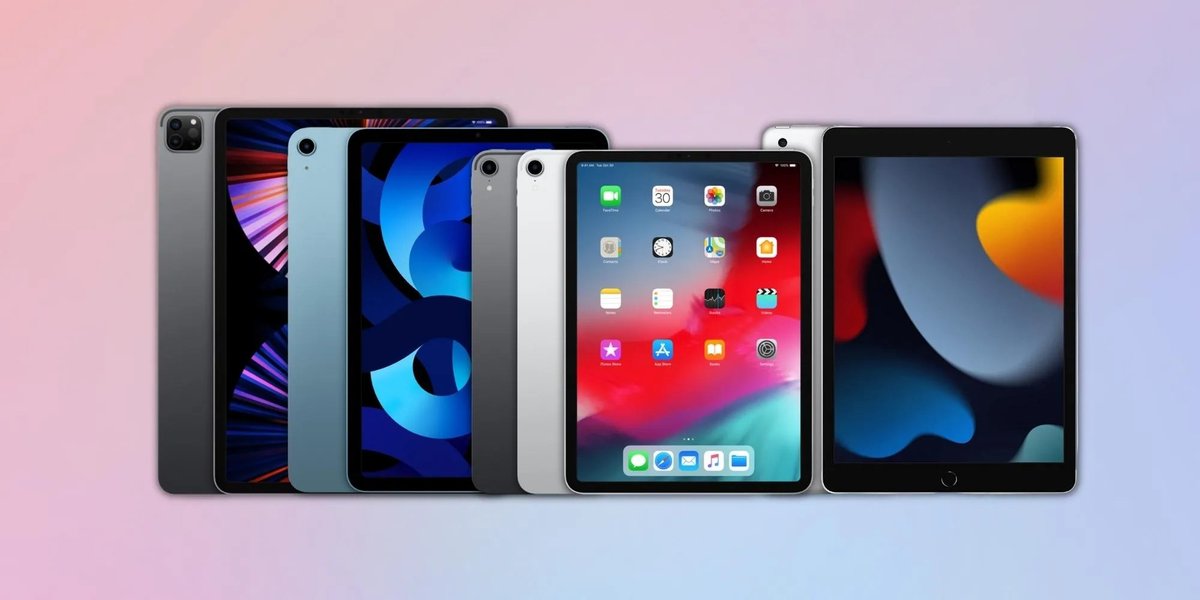
Navigating the world of iPads can feel like trying to map a constantly expanding universe. With over a decade of innovation and dozens of distinct models, understanding the nuances between an iPad Pro (2nd Gen) and an iPad Air (5th Gen) isn't just for tech enthusiasts – it's crucial for making a smart purchase. This is A Complete Guide to All iPad Models and Generations, designed to cut through the jargon and empower you to choose the perfect device for your needs.
Whether you're a student, an artist, a professional, or simply looking for the best tablet to binge-watch shows, the right iPad can transform your digital life. The wrong one might just leave you with buyer's remorse. Let's make sure you're getting the former.
At a Glance: Your iPad Journey Starts Here
- Four Core Lines: Apple offers the standard iPad, iPad mini, iPad Air, and iPad Pro, each designed for different users and budgets.
- Generational Leaps: Every generation brings significant improvements in chips, displays, cameras, and accessory support.
- Software Matters: Older iPads lose software support, impacting security, app compatibility, and feature access.
- M-Series Chips: Modern iPad Pros and Airs feature desktop-class M-series chips for unparalleled performance.
- Accessories Evolved: Apple Pencil (1st, 2nd, Pro) and Magic Keyboard have transformed the iPad into a versatile productivity tool.
- Check Your Model: Knowing your iPad's exact generation is key to understanding its capabilities and upgrade path.
Why Understanding iPad Generations Matters More Than Ever
You might wonder why delving into the history of iPad generations is so important. It's simple: unlike some other tech, an iPad's generation directly dictates its capabilities, compatibility with accessories, and, most critically, its eligibility for future software updates. Apple's commitment to supporting older hardware is commendable, but eventually, every device reaches its end-of-life for major OS upgrades.
Knowing the evolution helps you avoid buying an outdated model that won't run your favorite apps or won't be compatible with the latest Apple Pencil. It also helps you appreciate the incredible technological journey these devices have taken, from a simple content consumption device to a powerhouse capable of desktop-level tasks.
The iPad Family Tree: Four Distinct Paths
Since its debut in 2010, the iPad has branched into four main product lines, each serving a unique purpose and user demographic. Think of them as members of a family, each with their own strengths and personalities.
1. The Standard iPad: The Everyday Workhorse
The original iPad, and its subsequent "standard" models, have always been about accessibility and broad appeal. It's the entry point for most users, offering a balanced experience without breaking the bank.
- iPad (1st Generation) (2010): The device that started it all. Featuring an A4 chip and a 9.7-inch display, it was revolutionary for its time, though limited by 256MB RAM, no cameras, and a clunky 30-pin connector. It proved there was a market for a tablet device.
- iPad 2 (2011): A significant leap. Thinner, lighter, with an A5 chip and, crucially, both front and rear cameras. It introduced Smart Cover support, making it more versatile.
- iPad (3rd Generation) (2012): The Retina display arrived, offering a stunning 2048x1536 resolution. It also packed a more powerful A5X chip and a better 5MP rear camera, along with the option for LTE connectivity.
- iPad (4th Generation) (2012): A quick refresh, upgrading to the faster A6X chip and, importantly, switching to the more compact Lightning connector. This marked a shift in Apple's port strategy.
- iPad (5th Generation) (2017): After several years focusing on Air and Pro, the standard iPad returned as a budget-friendly option. It used the A9 chip, retained the 9.7-inch Retina display, and featured Touch ID.
- iPad (6th Generation) (2018): A major step for the entry-level model, as it became the first standard iPad to support the Apple Pencil (1st Gen), powered by the A10 Fusion chip. This opened up creative possibilities for students and casual users.
- iPad (7th Generation) (2019): Grew slightly to a 10.2-inch display and introduced the Smart Connector, finally supporting Apple's Smart Keyboard. It was also the first to ship with iPadOS.
- iPad (8th Generation) (2020): A simple chip bump to the A12 Bionic, offering a welcome performance boost.
- iPad (9th Generation) (2021): Another performance upgrade to the A13 Bionic chip. It gained a 12MP ultra-wide front camera with Center Stage, a fantastic feature for video calls, and doubled base storage to 64GB.
- iPad (10th Generation) (2022): A significant redesign, mimicking the Air and Pro lines with an edge-to-edge 10.9-inch Liquid Retina display and USB-C port. The front camera moved to a landscape orientation, ideal for video calls in a keyboard setup. It ran on the A14 Bionic chip.
- iPad (11th Generation) (2025): Looking ahead, this model promises the A16 Bionic chip, doubling base storage to 128GB, and Wi-Fi 6E. While it won't support Apple Intelligence, it’s set to be a strong value proposition for many.
Who is it for? Students, casual users, families, and anyone needing a reliable, affordable tablet for browsing, media consumption, light productivity, and creative tasks.
2. iPad mini: Power in Your Pocket
The iPad mini offers all the functionality of a full-sized iPad in a remarkably compact form factor. It's the ultimate portable productivity and entertainment device.
- iPad mini (1st Generation) (2012): Launched alongside the iPad 4th Gen, it introduced the 7.9-inch display, offering a smaller, lighter alternative with the A5 chip and Lightning connector.
- iPad mini 2 (2013): A crucial update, bringing the Retina display to the mini line, alongside the more powerful A7 chip (64-bit).
- iPad mini 3 (2014): A minor refresh, adding Touch ID but retaining the A7 chip.
- iPad mini 4 (2015): A more substantial redesign, making it thinner and lighter. It gained the A8 chip and a fully laminated display, improving visuals and responsiveness.
- iPad mini (5th Generation) (2019): After a long hiatus, the mini returned with a powerful A12 Bionic chip and, for the first time, Apple Pencil (1st Gen) support.
- iPad mini (6th Generation) (2021): A complete overhaul, adopting the edge-to-edge Liquid Retina display design of the Air/Pro lines, shrinking bezels, and moving Touch ID to the top button. It packed the A15 Bionic chip, USB-C, 5G, and supported the Apple Pencil (2nd Gen).
- iPad mini (7th Generation) (2024): This upcoming model is expected to feature the A17 Pro chip, bringing Apple Intelligence capabilities, enhanced cameras, and Apple Pencil Pro support, making it an incredibly powerful small tablet.
Who is it for? Readers, commuters, gamers, note-takers on the go, and anyone prioritizing ultimate portability without sacrificing performance.
3. iPad Air: The Sweet Spot
The iPad Air bridges the gap between the standard iPad and the Pro models, offering a compelling blend of premium features, performance, and a more accessible price point than the Pros.
- iPad Air (1st Generation) (2013): A major redesign, making the 9.7-inch iPad significantly thinner and lighter. It was the first iPad to feature the A7 chip with 64-bit architecture, a desktop-class innovation.
- iPad Air 2 (2014): Even thinner, this model introduced Touch ID to the Air line and an A8X chip for improved performance. Its laminated display reduced glare, a welcome upgrade.
- iPad Air (3rd Generation) (2019): After a long wait, the Air returned, growing to a 10.5-inch Retina display. It packed the A12 Bionic chip and supported both Apple Pencil (1st Gen) and the Smart Keyboard.
- iPad Air (4th Generation) (2020): This was a transformative generation for the Air, adopting the modern edge-to-edge 10.9-inch Liquid Retina display, with Touch ID integrated into the top button. It brought the A14 Bionic chip and USB-C connectivity, plus support for the Apple Pencil (2nd Gen).
- iPad Air (5th Generation) (2022): The Air received a massive performance boost, inheriting Apple's M1 chip from the Pro line, along with 5G connectivity and a 12MP ultra-wide front camera with Center Stage.
- iPad Air (6th Generation) (2024): Taking another leap, the 6th Gen Air also adopted the M2 chip and, for the first time, offered two size options: an 11-inch and a new 13-inch model, mirroring the Pro. It also moved its front camera to a landscape orientation.
- iPad Air (7th Generation) (2025): The upcoming 7th Gen Air is expected to upgrade to the M3 chip, bringing Apple Intelligence capabilities and Apple Pencil Pro support, cementing its position as a powerful, versatile choice.
Who is it for? Creative professionals, serious students, gamers, and users who need more power and premium features than the standard iPad, but don't require the absolute cutting edge (or price tag) of the Pro.
4. iPad Pro: Peak Performance
The iPad Pro line is where Apple truly pushes the boundaries of what a tablet can do. These are the most powerful, feature-rich iPads, designed for professionals and power users who demand desktop-class performance and advanced capabilities.
- iPad Pro (1st Generation) (2015): The debut of "Pro." It launched with a large 12.9-inch display (a 9.7-inch model followed in 2016), the A9X chip, four-speaker audio, and introduced support for the Apple Pencil (1st Gen) and Smart Keyboard.
- iPad Pro (2nd Generation) (2017): Featured a new 10.5-inch model and a refreshed 12.9-inch, powered by the A10X Fusion chip. The standout feature was the ProMotion 120Hz display, offering incredibly smooth scrolling and responsiveness. It also saw camera upgrades.
- iPad Pro (3rd Generation) (2018): A radical redesign. Edge-to-edge Liquid Retina displays (11-inch/12.9-inch), Face ID (replacing Touch ID), and the shift from Lightning to USB-C. The A12X Bionic chip provided immense power, and it introduced the Apple Pencil (2nd Gen) with magnetic charging.
- iPad Pro (4th Generation) (2020): Refined the 2018 design with the A12Z Bionic chip, adding a LiDAR scanner for advanced AR capabilities and an ultra-wide camera. It also gained Wi-Fi 6 and introduced support for the groundbreaking Magic Keyboard with trackpad.
- iPad Pro (5th Generation) (2021): The game-changer. This generation brought Apple's desktop-class M1 chip to the iPad Pro, delivering unprecedented performance. The 12.9-inch model debuted the stunning Liquid Retina XDR display (mini-LED), and it gained 5G connectivity and Center Stage on its 12MP ultra-wide front camera.
- iPad Pro (6th Generation) (2022): A refresh that integrated the even more powerful M2 chip, adding the innovative Apple Pencil hover feature, Wi-Fi 6E, and Bluetooth 5.3.
- iPad Pro (7th Generation) (2024): The latest and greatest, featuring the revolutionary M4 chip – the first Apple device to use the 3nm process, with an advanced Neural Engine for AI tasks. It introduced an all-new Ultra Retina XDR OLED display (11-inch/13-inch) and support for the new Apple Pencil Pro.
Who is it for? Graphic designers, video editors, 3D artists, app developers, power users, and anyone who needs the absolute best performance, display technology, and accessory integration in a tablet.
Unpacking iPad Evolution: Key Technological Leaps
Beyond the individual models, looking at the overarching technological advancements helps illustrate the iPad's journey from a niche device to a computing powerhouse.
Displays: From Good to Unbelievable
The screen is your primary interface with an iPad, and its evolution has been stunning. We've moved from standard IPS LCDs to the game-changing Retina display (iPad 3rd Gen), which packed so many pixels you couldn't discern individual ones. Then came Liquid Retina (iPad Pro 3rd Gen, iPad Air 4th Gen), offering vibrant colors and edge-to-edge designs. The iPad Pro 5th Gen introduced Liquid Retina XDR with mini-LED technology, providing incredible contrast and brightness for HDR content. Finally, the iPad Pro 7th Gen broke new ground with the Ultra Retina XDR OLED, delivering perfect blacks and unparalleled color accuracy. Features like True Tone (adjusts color to ambient light) and ProMotion (120Hz refresh rate for super-smooth visuals on Pro models) further enhance the visual experience.
Chipsets: Desktop-Class Power in Your Hand
The processing power inside iPads has consistently pushed boundaries. Starting with the A4, Apple's custom A-series chips (A5, A6X, A7, A8X, A9X, A10 Fusion, A12 Bionic, A14 Bionic, A15 Bionic, A16 Bionic, A17 Pro) offered industry-leading performance. However, the biggest leap came with the introduction of the M1 chip (iPad Pro 5th Gen, iPad Air 5th Gen), bringing desktop-class performance to tablets. This was followed by the M2 (iPad Pro 6th Gen, iPad Air 6th Gen), M3 (iPad Air 7th Gen), and the groundbreaking M4 (iPad Pro 7th Gen), which introduced a 3nm process and an enhanced Neural Engine specifically designed for advanced AI tasks.
Operating Systems: The Rise of iPadOS
Initially, iPads ran iOS, the same operating system as the iPhone. However, in 2019, Apple introduced iPadOS (starting with iPad 7th Gen), a dedicated operating system tailored for the iPad's larger screen and multi-touch capabilities. iPadOS brought enhanced multitasking features like Split View and Slide Over, a desktop-class Safari, and improved file management. Newer M-series iPads also gain access to powerful features like Stage Manager and, most recently, Apple Intelligence, which leverages advanced AI for personalized experiences across writing, image generation, and more.
Connectivity & Ports: Adapting to Modern Demands
The physical port on the iPad has seen significant changes. The original 30-pin dock connector gave way to the reversible Lightning connector (iPad 4th Gen, iPad mini 1st Gen). More recently, many models, including all modern Air and Pro iPads (iPad Pro 3rd Gen, iPad Air 4th Gen, iPad mini 6th Gen, iPad 10th Gen), have embraced the industry-standard USB-C port, offering faster data transfer, external display support, and broader compatibility with accessories. Some Pro models even feature Thunderbolt/USB 4 for professional workflows. Wireless connectivity has also kept pace, with Wi-Fi 6, Wi-Fi 6E, and 5G cellular options now common.
Security: From Fingerprint to Face
Security has evolved from the simple passcode to sophisticated biometric authentication. Touch ID (iPad Air 2, iPad mini 3) allowed fingerprint recognition through the Home button, and later, the top button on some models (iPad Air 4th Gen, iPad mini 6th Gen). The iPad Pro 3rd Gen introduced Face ID, using a sophisticated camera system for facial recognition, a feature that remains exclusive to the Pro line.
Cameras: More Than Just Snapshots
While not known for matching iPhone's camera prowess, iPad cameras have steadily improved. From no cameras on the 1st Gen to basic VGA and 0.7MP (iPad 2), they've grown to 12MP rear cameras, ultra-wide lenses, and even a LiDAR scanner (iPad Pro 4th Gen) for enhanced augmented reality experiences. The front camera is now often an ultra-wide lens with Center Stage (iPad Pro 5th Gen, iPad 9th Gen), which automatically keeps you in frame during video calls. The iPad 10th Gen and iPad Air 6th Gen even moved the front camera to a landscape orientation, making it much more practical for video conferencing with an attached keyboard.
Accessories: Unleashing Potential
The ecosystem of accessories has truly transformed the iPad from a media consumption device into a versatile tool.
- Apple Pencil: The original (1st Gen, 2015) brought precision input for artists and note-takers. The 2nd Gen (2018) improved on this with magnetic charging and a seamless design. The latest Apple Pencil Pro (2024) adds advanced features like squeeze gestures, haptic feedback, and barrel roll for even greater control. Compatibility varies significantly by iPad model.
- Keyboards: From the protective Smart Cover to the functional Smart Keyboard and Smart Keyboard Folio, Apple has continually refined its keyboard offerings. The Magic Keyboard (iPad Pro 4th Gen) was a game-changer, integrating a trackpad and a floating design, blurring the lines between tablet and laptop.
Cracking the Code: How to Identify Your iPad's Generation
So, you have an iPad, but you're not sure which generation it is? This is a common question, and thankfully, Apple makes it easy to find out. Knowing your model is the first step toward understanding its capabilities, compatible accessories, and potential for software updates.
The simplest and most reliable way to pinpoint your specific iPad model is to check its model number in the settings. Just go to Settings > General > About. Look for the "Model Number" field. Tap it once, and it will switch from a generic part number (e.g., MY3C2LL/A) to a concise A-number (e.g., A2270). Once you have this A-number, you can quickly look up which iPad generation it corresponds to. Alternatively, you can See your iPad generation using the serial number or by examining physical features like port type, home button presence, or camera bumps. These visual cues can be very helpful for older models or if your iPad isn't powering on.
The Upgrade Game: When Does it Make Sense?
Deciding when to upgrade your iPad isn't always straightforward. It typically comes down to a balance of performance needs, software support, and your budget.
Software Support is Key:
Apple generally supports iPads with major iPadOS updates for 5-7 years. However, certain older models fall off the list earlier due to chip limitations.
- Unsupported: iPads with A4, A5, A5X, and A6X chips (iPad 1st-4th Gen, Air 1st Gen, Mini 1st-3rd Gen) no longer receive iOS/iPadOS updates. This means no new features, potential security vulnerabilities, and dwindling app compatibility.
- Limited Support: iPads with A8/A8X chips (iPad Air 2, iPad mini 4) receive limited support up to iPadOS 15. A9/A9X chips (iPad 5th Gen, iPad Pro 1st Gen) receive support through iPadOS 16.
- Current/Future Support: Current iPadOS 18 supports iPads with A10 processors and newer. For Apple Intelligence, you'll need an iPad with an M1 chip or newer. If your iPad can't run the latest iPadOS, it’s a strong indicator that an upgrade is due.
Performance & Features:
Apple typically refreshes individual iPad models every two to four years. Newer models bring: - Faster Chips: Crucial for demanding apps, gaming, and multitasking. If your iPad feels sluggish, struggles with editing photos/videos, or lags during intense gaming, a newer chip (especially M-series) will be a revelation.
- Better Displays: From True Tone to ProMotion and mini-LED/OLED, displays offer richer colors, higher refresh rates, and improved readability.
- Accessory Compatibility: Newer iPads support the latest Apple Pencils (2nd Gen or Pro) and Magic Keyboards, significantly enhancing productivity and creative workflows.
- Modern Connectivity: Wi-Fi 6/6E and 5G ensure faster, more reliable internet access.
- Improved Cameras: Better quality, Center Stage, and LiDAR for AR.
If your current iPad meets your needs, there's no urgent rush to upgrade. But if you're hitting performance bottlenecks, missing out on key software features, or find yourself wanting the latest accessories, then the value proposition of a newer model quickly becomes clear.
Finding Your Perfect iPad: A Decision Guide
With such a diverse lineup, choosing the "best" iPad is less about absolute power and more about finding the right fit for your specific lifestyle and budget.
For the Casual User & Student: The Standard iPad (10th or 11th Gen)
If you're primarily browsing the web, checking email, watching videos, or taking notes in class, the standard iPad remains an unbeatable value. The latest 10th generation (with its A14 Bionic chip, USB-C, and landscape front camera) offers a modern design and great performance for everyday tasks. Looking to 2025, the 11th generation with its A16 Bionic chip and doubled base storage will further solidify its position as the go-to budget-friendly option. It's perfect for those who want the core iPad experience without overspending.
For the Ultra-Portable Power User: iPad mini (6th or 7th Gen)
Do you value portability above all else, but still need serious punch? The iPad mini is your champion. The 6th generation is a compact marvel, packing an A15 Bionic chip, USB-C, and Apple Pencil (2nd Gen) support into an 8.3-inch edge-to-edge design. If you can wait, the 7th generation in 2024 is set to be even more impressive with the A17 Pro chip and Apple Intelligence, making it a tiny powerhouse for gaming, reading, and on-the-go creative work.
For the Balanced Professional & Creative: iPad Air (5th, 6th, or 7th Gen)
The iPad Air truly hits the sweet spot, offering near-Pro level performance and features at a more approachable price. The 5th generation with its M1 chip is still incredibly capable. However, the 6th generation (with the M2 chip and new 11-inch and 13-inch sizes) is a fantastic option for those who need more screen real estate and desktop-class performance for creative projects, demanding apps, and serious multitasking. The upcoming 7th generation (M3 chip, Apple Intelligence, Apple Pencil Pro support) will make it an even more compelling choice for those seeking a future-proof device that balances power, portability, and value.
For the Absolute Professional & Power User: iPad Pro (6th or 7th Gen)
When compromise isn't an option, the iPad Pro stands alone. These devices are built for those who push boundaries. The 6th generation with its M2 chip is still a formidable machine, perfect for complex video editing, graphic design, and 3D rendering. But if you demand the absolute pinnacle of tablet technology, the 7th generation with the M4 chip and stunning Ultra Retina XDR OLED display is unparalleled. It's for artists, developers, and professionals who want a primary computing device that can handle any task thrown at it, especially with the Apple Pencil Pro and Magic Keyboard.
Your Next Step: Making an Informed Choice
The world of iPads is rich and varied, offering something for everyone. By understanding the generational differences and the distinct purposes of each product line, you're now equipped to make an informed decision. Consider your primary use cases, your budget, and how long you expect to keep the device. The advancements in chips, displays, and accessories have transformed the iPad from a simple tablet into a versatile, powerful computing platform. Choose wisely, and your new iPad will be a companion that genuinely enhances your digital life.